
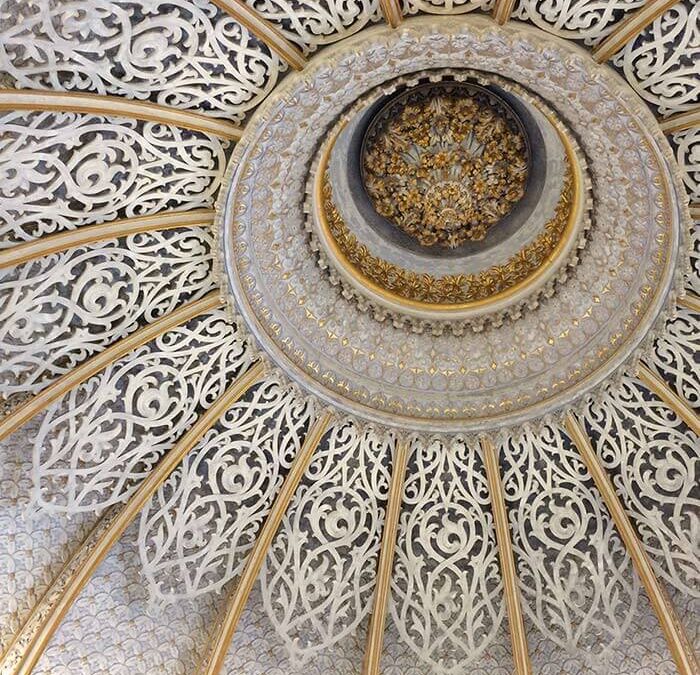
Ornate plasterwork covers far more than decorative cornices.
From ceiling roses and wall mouldings to archways, corbels and custom details, decorative plaster can be used throughout a home to introduce character and architectural definition.
Understanding the different types of ornate plasterwork is an important first step when renovating, restoring or redesigning an interior.
The right choice depends on the property’s architecture, ceiling height, room proportions and the overall effect you want to create.
1. Decorative Cornices
Cornices are among the most recognisable forms of ornate plasterwork.
Installed where the wall meets the ceiling, they create a transition between the two surfaces.
Decorative profiles can range from relatively restrained lines to elaborate patterns.
Where do decorative cornices work best?
They can be used throughout a home, including:
- Living rooms
- Dining rooms
- Bedrooms
- Hallways
- Entrance areas
The appropriate profile depends largely on scale.
A tall room can often support a deeper, more detailed cornice, while smaller rooms may suit a more restrained design.
2. Ceiling Roses
Ceiling roses are decorative plaster features positioned on the ceiling, traditionally around a central light fitting.
They remain popular because they create an immediate focal point.
A ceiling rose can work particularly well with:
- Pendant lights
- Chandeliers
- Feature lighting
- High ceilings
- Formal living spaces
- Entrance halls
The diameter and level of detail should suit both the room and lighting fixture.
3. Wall Mouldings
Wall mouldings can transform large, flat surfaces by creating panels, borders and architectural lines.
They can be highly decorative or surprisingly minimalist.
One advantage is flexibility.
Mouldings can be positioned according to the proportions of the wall and coordinated with furniture, artwork and other features.
4. Ceiling Mouldings
Decorative plaster doesn’t have to sit only around the perimeter of the ceiling.
Mouldings can be used to create ceiling borders, panels and feature areas.
These details can be particularly effective in rooms with higher ceilings where there is enough visual space for additional architectural elements.
5. Decorative Archways
Openings between rooms provide another opportunity for decorative plaster.
An archway can transform a simple transition into an architectural feature.
Depending on the home, the design may incorporate curved profiles, moulded edges, corbels or additional decorative detailing.
6. Corbels
Corbels are decorative elements positioned beneath architectural features such as arches, shelves or beams.
Traditional corbels can be highly detailed, while simpler versions provide architectural definition without dominating the room.
They can be particularly effective when used to visually support an archway.
7. Decorative Columns and Capitals
Columns can introduce a more formal architectural element.
Decorative capitals sit at the top of columns or pilasters and can range from relatively simple profiles to intricate traditional designs.
These features require careful use because they have considerable visual weight.
In the right setting, however, they can become a defining feature of the interior.
8. Panel Mouldings
Panel mouldings create framed sections across walls or ceilings.
They can be used to establish symmetry, frame artwork or provide visual structure to large spaces.
Contemporary interiors can also use simplified panel mouldings to add texture without relying on elaborate ornamentation.
9. Custom Plaster Features
Not every project can be completed using standard decorative profiles.
Custom plasterwork may be required when homeowners want to create a unique architectural feature or reproduce an existing detail.
This can be particularly useful during restoration projects.
10. Reproduction Ornate Plasterwork
Older properties sometimes contain decorative elements that are no longer readily available.
If part of a cornice, moulding or decorative feature has been damaged or removed, reproduction work may be required to achieve a suitable match.
The objective is to integrate the replacement with the existing architecture rather than make the repaired section obvious.
Choosing Between the Different Types of Ornate Plasterwork
With so many options available, it can be tempting to combine several decorative features.
However, good design often involves restraint.
Start with the architecture of the home.
Existing features can provide clues about appropriate profiles, proportions and styles.
Then consider which rooms justify additional detail.
A formal living room may suit a decorative cornice, ceiling rose and wall mouldings, while a bedroom may only require the cornice.
Matching Cornices and Ceiling Roses
Cornices and ceiling roses often appear in the same room, so they should complement one another.
They do not necessarily need identical patterns.
Instead, consider whether they share a similar level of detail, scale and architectural style.
The lighting fixture should also be part of the decision.
A large decorative rose surrounding a very small pendant can feel unbalanced, just as an oversized chandelier may overpower a delicate ceiling feature.
Ornate Plasterwork for Older Homes
When working with an older home, look closely at what is already there before selecting new features.
Original cornices, ceiling roses and mouldings can provide valuable references.
Even if some sections have been removed, surviving details elsewhere in the home can help guide restoration choices.
This can create a more authentic result than selecting decorative features without considering the original architecture.
Ornate Plasterwork for Modern Interiors
Contemporary interiors can also benefit from decorative plaster.
The difference is often the complexity of the profile.
Simple cornices, clean panel mouldings and restrained ceiling details can provide depth while preserving a modern aesthetic.
This makes ornate plasterwork much more versatile than its traditional reputation might suggest.
Repairing Existing Decorative Plaster
Not every damaged feature needs to be completely replaced.
Depending on its condition, repair or restoration may be possible.
Cracks, missing sections and damaged edges can sometimes be addressed while retaining much of the existing feature.
An experienced plasterer can assess the condition of the decorative work and recommend whether repair, restoration or replacement is the more suitable option.
Planning an Ornate Plastering Project
Before beginning, consider the project as part of the wider interior.
Think about:
- Ceiling height
- Room size
- Existing architectural features
- Lighting positions
- Wall proportions
- Interior style
- Other rooms in the home
These decisions can help ensure individual features work together.
Our complete guide to ornate plasterwork explores these considerations in greater detail, including how decorative plaster can be incorporated into both renovation and restoration projects.
You can also explore the benefits of ornate plasterwork to understand why homeowners continue to incorporate these architectural details into their interiors.
Find the Right Ornate Plasterwork for Your Home
From decorative cornices and ceiling roses to mouldings, archways, corbels and custom restoration work, there are many ways to introduce architectural detail into a home.
The best choice isn’t necessarily the most elaborate.
It is the feature that suits the proportions, architecture and overall character of your property.
Plasterfix provides professional ornate plastering services for the installation, repair and restoration of decorative plasterwork. Speak with the team about the features and finish that best suits your project.