
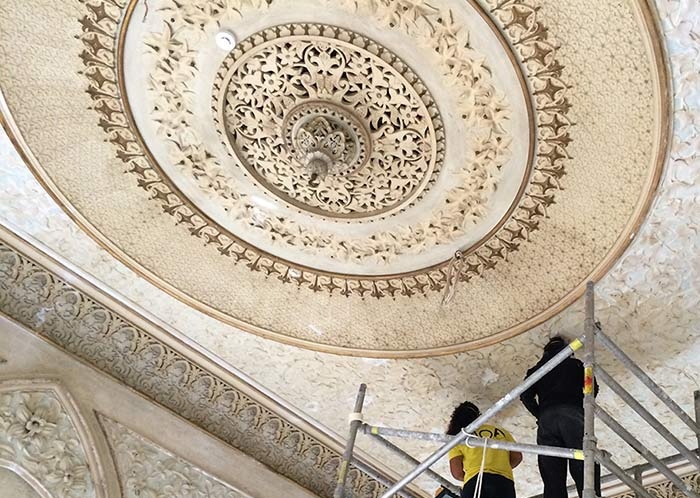
Walk into a beautifully finished home and there are often small architectural details that make the space feel complete. A decorative cornice framing the ceiling, a ceiling rose above a pendant light, carefully shaped mouldings around an archway or traditional plaster details restored to suit the character of an older property can all have a major impact.
This is where ornate plastering comes into its own.
Rather than treating walls and ceilings purely as flat surfaces, ornate plasterwork introduces architectural detail, depth and character. It can be used to restore original features, complement the period of a home or introduce carefully considered decorative elements into a newer interior.
The key is choosing the right type of plasterwork for the property.
Too much detail can overwhelm a room, while poorly chosen mouldings can feel disconnected from the rest of the architecture. Well-designed and professionally installed ornate plasterwork should feel as though it belongs in the space.
In this complete guide, we explore what ornate plasterwork is, the different features available, how it can be used throughout a home and what homeowners should consider before beginning a project.
What Is Ornate Plastering?
Ornate plastering is the creation, installation, restoration or repair of decorative plaster features used throughout a building.
Unlike standard plastering, where the primary objective is usually to create smooth and functional walls or ceilings, ornate work introduces decorative and architectural elements.
These can include:
- Decorative cornices
- Ceiling roses
- Archways and arch mouldings
- Corbels
- Decorative wall mouldings
- Ceiling panels
- Plaster columns and capitals
- Decorative trims
- Custom plaster features
- Restoration or reproduction of existing details
The style can range from highly decorative traditional designs to restrained profiles that provide subtle architectural definition.
For homeowners, this means ornate plastering does not necessarily require turning a room into an elaborate period interior. The scale and level of detail can be adapted to suit the property.
Why Ornate Plasterwork Has Remained Popular
Interior trends change constantly, but architectural detailing has remained an important element of residential design.
One reason is that decorative plasterwork forms part of the building itself rather than simply decorating it.
Furniture can be replaced. Paint colours change. Artwork moves.
Cornices, ceiling roses, mouldings and architectural plaster features become part of the room’s structure and visual identity.
In older homes, these details can be particularly important because they contribute to the character people associate with the property.
In renovated or contemporary homes, they can provide visual depth that would otherwise be missing from large flat walls and ceilings.
For a deeper look at the practical and aesthetic advantages, see our guide to the benefits of ornate plasterwork for your home.
Ornate Plastering in Period and Character Homes
One of the most common applications for ornate plastering is maintaining or restoring the character of an older home.
Over the life of a property, original decorative features can be damaged, removed or altered.
Renovations may have replaced traditional cornices with basic alternatives. Ceiling roses can be removed when lighting is updated. Sections of decorative plaster can crack or deteriorate over time.
When renovating these homes, the objective isn’t always to make everything look new.
Sometimes the better approach is to restore the architectural character that made the home appealing in the first place.
Existing details can provide a reference for the design, scale and style of replacement features. This allows new plasterwork to integrate more naturally with the property.
Ornate Plasterwork in Contemporary Homes
Decorative plaster isn’t limited to heritage-style properties.
Modern interiors increasingly combine clean finishes with carefully selected architectural features.
A relatively simple cornice profile can soften the transition between the wall and ceiling. A large ceiling rose can provide a focal point for feature lighting. Wall mouldings can add dimension to otherwise plain rooms.
The difference is often in restraint.
Instead of highly detailed patterns throughout every room, contemporary ornate plastering may use one or two strong architectural elements.
The result can be a room that retains a modern feel while gaining more depth and personality.
The Main Types of Ornate Plasterwork
There are many ways decorative plaster can be incorporated into a property. Understanding the main options makes it easier to determine which features suit your home.
Decorative Cornices
Cornices create the transition between walls and ceilings.
Basic cornices primarily serve a finishing function, while ornate cornices become architectural features in their own right.
Profiles can range from relatively simple stepped designs to detailed traditional patterns.
The right choice depends on factors such as:
- Ceiling height
- Room dimensions
- Existing architectural features
- Property style
- Desired level of detail
Large, heavily detailed cornices can look impressive in rooms with generous proportions, while more restrained profiles may work better in smaller spaces.
Ceiling Roses
A ceiling rose creates a decorative focal point around a ceiling light, pendant or chandelier.
They are strongly associated with traditional interiors but can also be incorporated into contemporary designs.
Proportion is particularly important.
A ceiling rose that is too small can disappear visually, while one that is too large may dominate the room.
The lighting fixture should also be considered alongside the plasterwork rather than selected independently.
Decorative Mouldings
Mouldings can introduce structure and visual interest to walls, ceilings, doors and other architectural elements.
They can be used to create wall panels, define sections of a room or complement other decorative features.
Simple mouldings can create subtle detail, while more elaborate profiles can become prominent design elements.
Archways
Decorative plasterwork can transform an ordinary opening between rooms into an architectural feature.
Archways can include shaped openings, decorative trims, corbels or other moulded details.
They are particularly useful when creating a visual transition between connected living spaces.
Corbels
Corbels are decorative architectural elements commonly positioned beneath arches, beams, shelves or other features.
They can range from understated designs through to highly detailed traditional styles.
Custom and Reproduction Plasterwork
Sometimes an existing feature cannot simply be replaced with an off-the-shelf product.
A homeowner may want to reproduce damaged original detailing, match an existing feature elsewhere in the property or create something specific to a renovation.
Specialist ornate plastering can involve recreating or matching these architectural elements so new work integrates with the surrounding interior.
For a more detailed comparison, read our guide to the types of ornate plasterwork, including cornices, ceiling roses and mouldings.
Choosing Ornate Plasterwork That Suits Your Home
The most decorative option isn’t automatically the best option.
Successful ornate plasterwork is usually about proportion and consistency.
Consider the Architecture
Start with the property itself.
If the home already contains original decorative features, these provide valuable design cues. Matching or complementing those details can create continuity between rooms.
For newer properties, look at the broader interior design.
Are the spaces traditional, contemporary, minimalist or transitional?
The plasterwork should support that style rather than fight against it.
Consider Ceiling Height
Ceiling height can dramatically influence how a cornice or ceiling feature appears.
Larger profiles generally have more visual weight. In a tall room, this can create balance.
In a smaller room with lower ceilings, the same profile may feel oversized.
Think About the Entire Room
Avoid choosing individual features in isolation.
A decorative cornice, ceiling rose, wall moulding and lighting fixture all contribute to the same visual composition.
They should work together.
Keep the Design Consistent
Not every room needs identical plasterwork, but there should usually be a sense of connection throughout the property.
Formal living spaces may warrant more elaborate features, while bedrooms or secondary spaces can use simpler variations.
Restoring Existing Ornate Plasterwork
Existing decorative plaster can be one of the most distinctive features of an older home.
Where possible, retaining and repairing original detailing can help preserve the property’s character.
The appropriate approach depends on the condition of the plaster.
Some projects may involve repairing cracked or damaged sections. Others require missing components to be recreated or surrounding plaster to be carefully integrated with the original feature.
This is one area where specialist experience becomes particularly important.
Decorative plaster isn’t simply about creating a smooth surface. Profiles, patterns and transitions need to align correctly so repairs do not stand out from the surrounding work.
Adding New Ornate Plasterwork During a Renovation
Renovations provide an excellent opportunity to introduce architectural detailing because plasterwork can be considered alongside lighting, painting, cabinetry and other finishes.
Planning early can also produce a more cohesive result.
For example, if a ceiling rose will surround a feature pendant, the size and location of both elements should be considered together.
If wall mouldings will frame artwork or furniture, their positioning can be planned around the room layout.
When ornate plastering is treated as part of the overall renovation rather than an afterthought, the result is generally more integrated.
Does Ornate Plasterwork Increase Property Value?
There is no simple formula that says installing a particular cornice or ceiling rose will increase a property’s value by a specific amount.
Its value is more closely related to presentation, character, quality and buyer appeal.
In a character home, restoring appropriate architectural details can help create a more complete and authentic interior.
In other properties, well-designed decorative plaster can improve perceived quality and help spaces feel more considered.
However, workmanship and design matter.
Poorly proportioned or excessive detailing may have the opposite effect.
We’ve explored this topic in more detail in our guide: Does ornate plasterwork add value to a property?
Why Professional Installation Matters
Decorative plasterwork requires a different level of precision from straightforward wall and ceiling finishing.
Cornice lines need to remain consistent around the room. Corners need to join cleanly. Repeating decorative patterns need to align. Ceiling roses need to be positioned correctly, and repair work must integrate with existing profiles.
Minor inconsistencies can become highly visible because decorative plaster naturally attracts attention.
Professional ornate plastering is therefore as much about finishing and attention to detail as the decorative feature itself.
Repair, Restore or Replace?
Homeowners renovating older properties often face a choice between repairing existing decorative plaster and replacing it.
There isn’t one correct approach for every project.
Repair may make sense when much of the original feature remains intact and only isolated areas are damaged.
Restoration may be appropriate when maintaining original architectural character is a priority.
Replacement may be more practical when damage is extensive or previous alterations have left the original feature incomplete.
An experienced plasterer can inspect the existing work and help determine the most suitable approach.
Creating a Cohesive Interior
The best ornate plastering often isn’t the feature you notice immediately.
Instead, you notice that the room simply feels finished.
The cornice suits the ceiling height. The ceiling rose works with the lighting. Wall mouldings align with the proportions of the room. Details carry naturally from one space into another.
This is why planning matters.
Ornate plasterwork should complement flooring, cabinetry, lighting, paint colours, furniture and the broader architecture.
When those elements work together, decorative plaster becomes part of the character of the home rather than an isolated decoration.
Is Ornate Plasterwork Right for Your Home?
It may be worth considering if you are:
- Renovating a period or character property
- Restoring damaged original features
- Replacing architectural details removed during previous renovations
- Looking to introduce more character into a newer home
- Creating a feature ceiling or lighting installation
- Wanting more detail and definition in formal living spaces
- Trying to achieve a more complete, high-quality interior finish
The right solution depends on your property, existing architecture and desired result.
Bring Character Back Into Your Home With Professional Ornate Plastering
Ornate plasterwork has the ability to completely change how a room feels without relying on temporary design trends.
From decorative cornices and ceiling roses to mouldings, archways and carefully restored original features, the right plasterwork can introduce character, proportion and architectural detail that becomes part of the home itself.
If you’re planning a renovation, restoring an older property or considering new decorative features, Plasterfix can help you determine the most suitable approach.
Contact Plasterfix to explore the professional ornate plastering services to discuss your project and the finish you want to achieve.